Sunday, July 19, 2009

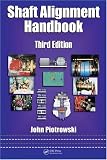
Shaft Alignment Handbook, Third Edition (Dekker Mechanical Engineering)


First some comments about the book in general. It's written by a working engineer who has spent a lifetime actually working in the field. He got into working on rotating machinery with an emphasis on alignment somewhat by accident. Then he developed his own expertise, and finally was persuaded to publish it in book form. This was done in 1986, twenty years ago. It has now been issued in its third edition that incorporates new techniques, new tools and as he incorporates his own additional learning.

The material covered here isn't covered in school. This is practical knowledge based on a lifetime of working with equipment out in the real world. The writing style matches. Mr. Piotrowski writes as he talks, one professional with a lot of experience talking to another who will be there one day.

Any maintenance man working in an industrial plant will quickly recognize the problems discussed here, and will find other nuggets of knowledge that will help him to identify other areas where he needs to re-think about a problem.

Highly recommended!
Read More Reviews on Shaft Alignment Handbook, Third Edition (Dekker Mechanical Engineering)...

Saturday, July 18, 2009

Steam Plant Calculations Manual (Mechanical Engineering (Marcell Dekker))


The book is presented in question and anwser fromat--a technical question anwsered by a calculation and an explanation. I found it very helpful over a broad range of calculations on subject.
Read More Reviews on Steam Plant Calculations Manual (Mechanical Engineering (Marcell Dekker))...

Friday, July 17, 2009

Mechanical Engineering Handbook (Reference)


Purchased, then returned, this book several months ago while trying to expand my engineering reference library. At first glance the breadth of the text seemed passable, but after paging through it for a couple of days I realized that this book is just a collection of formulae and very few diagrams, with nearly no technical discussion at all.

For a book slightly larger in dimensions than the "toolbox-sized" Machinery's Handbook, this book is all white space and very little information save for pages and pages of mathematical proofs of equations (which are fine when you're in school, but not when you're a practicing engineer).
Read More Reviews on Mechanical Engineering Handbook (Reference)...

Mechanical Design Handbook


This mechanical engineering reference book is the very best of its kind. I use it frequently within my own consulting practice, and find it to be vastly superior to the more popular Mark's and Eschbach's Handbooks. Rothbart's book covers a broad range of highly-relevant subject matter without sacrificing depth or detail. To accomplish this, the editors wisely avoid content that is not generally useful across various industries. Each subject is thoughtfully and thoroughly presented. This is definitly an engineer's engineering reference book. It is an excellent resource for those practicing in the field and very much worth the price.
Read More Reviews on Mechanical Design Handbook...

Thursday, July 16, 2009

Mechanical Behavior of Materials


Courtney has put together a nice survey of the various fields of (classical) materials science, from basic elasticity up through the mechanisms of plasticity, fracture, and so on. He covers these topics for metals, polymers and composites, and ceramics. The captions on the figures are a beautiful, beautiful thing. You can easily gain a decent understanding/review of the material by just flipping through a chapter and reading the paragraph-long captions on each of the figures- in fact, that was how I studied for my exams.

The book very much lacks examples, with perhaps only two or three half-page examples per chapter. I think the end-of-chapter problems were just a quick afterthought after the text was written. I think there are only 10 figures "new" for this book; Courtney pulled figure after figure after figure from the literature and/or other mechanics of materials books. The vast majority of the derivations in the text skip steps- a lot of steps- which makes them hard to follow. Courtney tries to discuss a lot of topics, which is fine, but sacrifices the necessary depth so that readers may gain sufficient understanding of the material. Frankly, if you want to learn about dislocations, pick up Hull and Bacon's book Introduction to Dislocations, Fourth Edition or any of the other texts entirely on dislocations.

I can't really recommend this text. Broad-brush survey books certainly have their place and proper usage, but I think this book is really lacking on substance.
Read More Reviews on Mechanical Behavior of Materials...

Wednesday, July 15, 2009

Mechanical Estimating Manual: Sheet Metal, Piping and Plumbing


I am designing and estimating for a light commercial HVAC contractor and this book gives me what I need to estimate and bid projects. This reference book gives the background about where the estimating numbers come from - which is good. The Correction Factors" tables (among others) are easy to find and easily understood. For someone doing ductwork estimates by hand, and are working to be accurate will have the info they need in this book. My etimates have been competitive - so I am trusting the book more all the time.
Read More Reviews on Mechanical Estimating Manual: Sheet Metal, Piping and Plumbing...

Mechatronics: Electronic Control Systems in Mechanical and Electrical Engineering (3rd Edition)


Mechatronics is the synergistic combination of mechanical engineering ("mecha" for mechanisms), electronic engineering ("tronics" for electronics), and software engineering. The purpose of this interdisciplinary engineering field serves the purposes of designing and controlling advanced hybrid-systems. This textbook is widely used in classes on mechatronics, but I find it much too shallow to be helpful. It is a good introduction to what mechatronics is, but past that point mechanical engineers will not be enlightened about electronics, as electronics engineers will not be enlightened about mechanics. Also, in my opinion, this book has more of a technician's handbook feel about it than it does that of an engineering text. If you are a mechanical or electronics engineer that really wants to learn about this fascinating field, might I recommend "Mechatronics: An Integrated Approach" by De Silva. It has the content you need to do analysis and design of mechatronic systems. I see Amazon does not show a table of contents for this book, so I do that here for the purpose of completeness:
1 Mechatronics.
2 Sensors and transducers.
3 Signal conditioning.
4 Data presentation systems.
5 Pneumatic and hydraulic systems.
6 Mechanical actuation systems.
7 Electrical actuation systems.
8 Basic system models.
9 System models
10 Dynamic responses of systems.
11 System transfer functions.
12 Frequency response.
13 Closed-loop controllers.
14 Digital logic.
15 Microprocessors.
16 Assembly language.
17 C language.
18 Input/output systems.
19 Programmable logic controllers.
20 Communication systems.
21 Fault finding.
22 Mechatronics systems.
Appendix A: The Laplace transform.
Appendix B: Logic gates.
Appendix C: Instruction sets.
Appendix D: C library functions.


Read More Reviews on Mechatronics: Electronic Control Systems in Mechanical and Electrical Engineering (3rd Edition)...

Tuesday, July 14, 2009

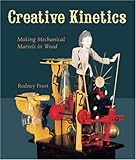
Creative Kinetics: Making Mechanical Marvels in Wood


This author is enjoyable & it's easy to see how much he loves creating these unique items! He leaves enough to the imagination & to your own creativity to make this a unique learning experience!
Read More Reviews on Creative Kinetics: Making Mechanical Marvels in Wood...

Mechanical Engineering Design (College Custom Series)


Fast shipping. Great Item. Great price for this item. Will buy from seller again.
Read More Reviews on Mechanical Engineering Design (College Custom Series)...

Monday, July 13, 2009

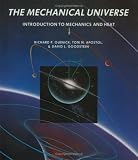
The Mechanical Universe: Introduction to Mechanics and Heat


I found The Mechanical Universe to be among the best texts on mechanics and heat that I've ever encountered. It is clearly written, gives background material on the development of the subject, builds student knowledge with logical development and orderly progression of subject matter. The inclusion of mathematical fundamentals is well advised. Too often, the student learns his mathematics in separate courses without a sense of its applicability in physics. In The Mechanical Universe, the applications are up front, which is very much to the student's advantage. Beyond that, the book has material not often found in physics texts. For example, I used material from the book's presentation of planetary orbits in writing my book, "Extra-Terrestrial Civilizations in our Neighborhood," which develops a serious estimate of the chances that at least one planet within a thousand light years has an advanced technical civilization. H. Richard Lukens, jr.
Read More Reviews on The Mechanical Universe: Introduction to Mechanics and Heat...

The Mechanical Universe: Mechanics and Heat, Advanced Edition


This is a very good text on mechanics for college physics students. The level is appropriate-not too mathematical and not too theoretical. The basics are well-covered and there are interesting discussions of how such concepts as force, momentum and angular momentum are applied in daily life, e.g, why a boxer "rolls with a punch". The material on heat is not as well discussed as that on mechanics but overall it is a very good text.
The problem sets are thoughtful and stimulating.
Read More Reviews on The Mechanical Universe: Mechanics and Heat, Advanced Edition...

Sunday, July 12, 2009

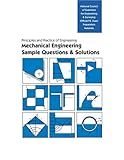
PE Sample Questions and Solutions: Mechanical Engineering (Book)


I had the book only, no CD. CD was not included when I bought this book, so I cannot rate it. This book is almost identical to the exam in layout. It also has information about the exam from the people who write the exams. This book is excellent to get a "feel" for how the exam will be. If you have done your preperation with other materials this is a good way to get some confidence about the exam. (Or not.)

STUDY, STUDY, STUDY.

This book is NOT a study guide, and doing well on these problems does not mean you will do well if this is the only thing you work with. The exam covers a wide scope of material but by the very limits a particular exam can not cover everything. So it is with this book. It is sample questions with solutions. Really it is like a sample exam. Note, multiple exams are in the room with you. So people around you will have different questions than you do.

I used this book AFTER studying the ME Review Manual by Lindeburg (MERM). I used it as a practice exam to get my timing down. I set the clock and worked 20 problems from the "morning section" in 2 hrs. After eveluating how I did, and working on any weak areas I worked the next 20. Then I did the same with the "afternoon" section.

The book has 40 problems representing the morning "breadth" section. And 40 more problems from each of the afternoon "depth" sections. During the exam you only have 6 minutes per problem.

I would only spend time with this book after getting ready by studying the MERM. Also you can use it to get a feel for which afternoon section you want to take. I passed. You can too, good luck! Also I would not buy a fancy calculator just for this exam. I did it with a TI-30. Also, I bought a second TI -30 for back up, which I kept unopened in the package and returned it to the store after the exam. SPEED and ACCURACY are what will get you through the exam. With only 6 minutes per problem you do not have time during the test to "study" a topic enough to do the problem.
Read More Reviews on PE Sample Questions and Solutions: Mechanical Engineering (Book)...

Saturday, July 11, 2009

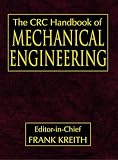
CRC Handbook of Mechanical Engineering


This handbook has a thorough review on almost all the related topics that a mechanical engineer could be working on. Due to too many topics it is trying to include in this volume, detailed information such as the related tables or figures is not available in this book as I have expected. However, this book does provide a tool that gives me more insight for all the related mechanical enginnering topics I am interested. I will use this book for my PE study and exam.
Read More Reviews on CRC Handbook of Mechanical Engineering...

Friday, July 10, 2009

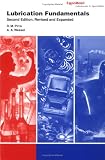
Lubrication Fundamentals, Second Edition (Mechanical Engineering (Marcell Dekker))


As a senior Chemical Engineering Student, I have been exposed to some very dry and poorly written text books, this however, is not one of them. I bought this book simply for curiosity and to help prepare for a job interview. Very well written and easy to follow for readers of any background.
Read More Reviews on Lubrication Fundamentals, Second Edition (Mechanical Engineering (Marcell Dekker))...

Thursday, July 9, 2009

Mechanical and Electrical Systems for Historic Buildings: Profitable Tips for Professionals, Practical Information for Preservationists


This book combines traditional construction techniques, electrical contracting methods, architectural history, and museum conservation to give a 'real world' approach to making this activity a usual business practice, with reasonable profit for practitioners, and retention of the public's architectural heritage. It should be updated and reissued.
Read More Reviews on Mechanical and Electrical Systems for Historic Buildings: Profitable Tips for Professionals, Practical Information for Preservationists...

Quick Reference for the Mechanical Engineering PE Exam, Fourth Edition


It's true, all the equations are here, but since I used the big book (Mechanical Engineering Reference Manual for the PE Exam) for all the studying, I find it easier simply to look back at that book for the equations. I suppose that if I learn all the things in the big book well enough that I don't need it, that this would be a good, handy, quick reference, but I just don't find myself using it. The big book is all I need.
Read More Reviews on Quick Reference for the Mechanical Engineering PE Exam, Fourth Edition...

Wednesday, July 8, 2009

Air Conditioning and Mechanical Trades: Preparing for the Contractor's License Examination


this book is really just a bunch of sample questions. it has tons, yes. they are tough also and the book does give the answers but thats the books whole form of teaching. it tells about the exam, but not enough. dont let me scare you off, if youre planning to take the test, buy it. the questions are of the same type. just reallly borring!
Read More Reviews on Air Conditioning and Mechanical Trades: Preparing for the Contractor's License Examination...

Mechanical Design, Second Edition


This is a reasonably "up to date" reference book for general mechanical design. The book has well organized solutions that include typical trial and error calculations that are close to real life design solutions where balance between what you need and what is available is often a necessary design compromise.
Read More Reviews on Mechanical Design, Second Edition...

Tuesday, July 7, 2009

Mechanical Vibration


Palm takes the reader into a systematic exposition of the theory of mechanical vibrations. Showing how this can be understood in terms of the basic physics. He walks through progressively more intricate cases, starting with the simplest of systems with 1 degree of freedom.

The book is positioned as a text for an undergrad course, with numerous problem sets and chapter summaries. Also, he chooses Matlab in order to give numerical methods that can be applied to various problems.

By the way, Palm is also the author of a book on using Matlab, "Introduction to Matlab 7 for Engineers". You might want to also check that out, if you are considering using Matlab as your numerical engine.
Read More Reviews on Mechanical Vibration...

Monday, July 6, 2009

Dynamic Mechanical Analysis: A Practical Introduction, Second Edition


Is a nice, good for begginers, book for those just entering the world of DMA. Helps you understand the basic concepts, and walks you through practical understanding of thermodyanmic studies of polimers.
Read More Reviews on Dynamic Mechanical Analysis: A Practical Introduction, Second Edition...

Sunday, July 5, 2009

Mechanical Devices for the Electronics Experimenter


As I understand it, Rorabaugh wrote this book as a supplementary resource for robotics hobbyists, rather than as a primary tool meant to stand on its own. It is valuable within this context. If you have a background in basic electronics and robotics, or are reading this book concurrently with others in these areas, Rorabaugh's book will make sense and add to your understanding. Yes, it is true that I have seen clearer discussions of vector math in other books. The examples on pages 25 and 89 are not very clear. Rorabaugh uses terms like 'annulus' (p. 108) without explaining them ('annulus' refers to any ring or ringlike mark), and on p. 109, he refers to planetary gear trains, which are not described and explained until p. 118. All this being said, for those interested in topics such as levers, gears, wheels and pulleys, encoders, solenoids, springs, and linkages, Rorabaugh will provide you with the introductory theory, formulas, and design ideas you are seeking. I thought the section on pneumatics was good, and I found materials in that section that I have not seen duplicated elsewhere. There are plenty of drawings, and the explanations are concise. You can spend your time hunting through various engineering texts and scattered Web sites and numerous other places for the same material, or you can get a concise introduction to these topics in this one book, and use it as the basis for learning more. I opted for the book, and I am pleased with my decision.
Read More Reviews on Mechanical Devices for the Electronics Experimenter...

Mechanisms and Mechanical Devices Sourcebook


This book only illustrated very specific mechanisms. Not what I expected. I do not recommend it.
Read More Reviews on Mechanisms and Mechanical Devices Sourcebook...

Saturday, July 4, 2009

Chemical Mechanical Planarization of Semiconductor Materials


This is an outstanding book. It provides an overview of the current status of CMP and serves as a significant update to Steigerwald's 1997 book, which summarized the state of CMP knowledge (which began for electronic applications in 1991)at that time. Much has happened in the second half of CMP's existence.

The book is well edited by Mike Oliver. It includes chapters written by well known CMP specialists that focus on process aspects (technology, equipment, pads, cleaning), on metals (theory and applications), on slurries, and on patterned wafers. It also provides chapters with overviews of CMP. Each chapter has extensive references.

The individual chapters are carefully written to offer an introduction and broad perspectives to new CMP workers while providing depth of insight and material for experienced practitioners. This is an ideal book for advanced undergraduates and graduate students who are working in the field and for those who are starting to do planarization of semiconductor materials. It is also an ideal reference book for experienced polishers since it gives information about the process at a level that is useful and insightful.

I have found the book very useful to me both for its clear summaries of material that I already know about and for its helpful explanations of areas that I am not familiar with. I highly recommend it.


Read More Reviews on Chemical Mechanical Planarization of Semiconductor Materials...

Friday, July 3, 2009

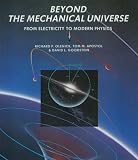
Beyond the Mechanical Universe: From Electricity to Modern Physics


This is an elementary text on electricity and magnetism with some chapters on special relativity and modern physics. It is manifestly written for college students and has a strong historical bent. The explanations and discussions are very clear and the mathematical derivations are given in detail. This book is highly recommended for novice students who are studying electricity and magnetism. It is also very suitable for self-study.
Read More Reviews on Beyond the Mechanical Universe: From Electricity to Modern Physics...

Thursday, July 2, 2009

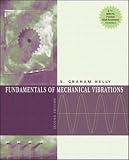
Fundamentals of Mechanical Vibrations


A very well organised book in all. A must have for the student and the professional engineer.
Read More Reviews on Fundamentals of Mechanical Vibrations...

Making Mechanical Marvels In Wood


I bought this book back in 1991 when it was new......and it set on my shelf for 17 years. In 2008, I made my first model...the wooden u-joint model. In the last few months I have made 6 more models. I have only had minor problems with a couple of patterns. The back plate patterns on a couple of models are very hard to follow...because he advocates making a jig......which is ok......except his jig is not the same size as the back plate......a minor issue.

I would rate myself an advanced woodworker with a full shop of tools.......and would rate these patterns challenging....but fun. My fellow engineers at work love playing with my finished models. They also would make great presents for the grand children.
Read More Reviews on Making Mechanical Marvels In Wood...

Wednesday, July 1, 2009

Mechanical Engineering Design


As an engineering student who is trying to learn and understand the concepts in this book, I have found it nearly impossible to get clear and concise explanations of the concepts covered in this book. Many of the examples are incomplete. They take short cuts and don't explain why they did what they did. This book makes WAY too many assumptions that you just magically already knew what they were talking about. For each chapter, I've had to go through and spend hours deciphering what in the world they were trying to say. There is little consistency in notation. The notation chosen doesn't always coincide with standard notation. They rarely clearly define the notation. Many of the figures are mediocre at best and poorly labeled.

The concepts in this book are very important, so they need to be presented in a simple, easy to understand way. The concepts are not necessarily difficult, but they are difficult to learn from this book's explanations. From what I've heard, the next edition isn't much better if any. The editors need to work their way through this book and fill in the gaps, making sure everything is clearly illustrated, labeled, and explained.


Read More Reviews on Mechanical Engineering Design...

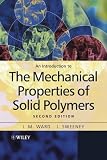
An Introduction to the Mechanical Properties of Solid Polymers


It wasn't great, but it was a required book for the class I took, so I suppose it was everything I needed. That's about all I can say. I actually barely read anything in the class.
Read More Reviews on An Introduction to the Mechanical Properties of Solid Polymers...

Labels